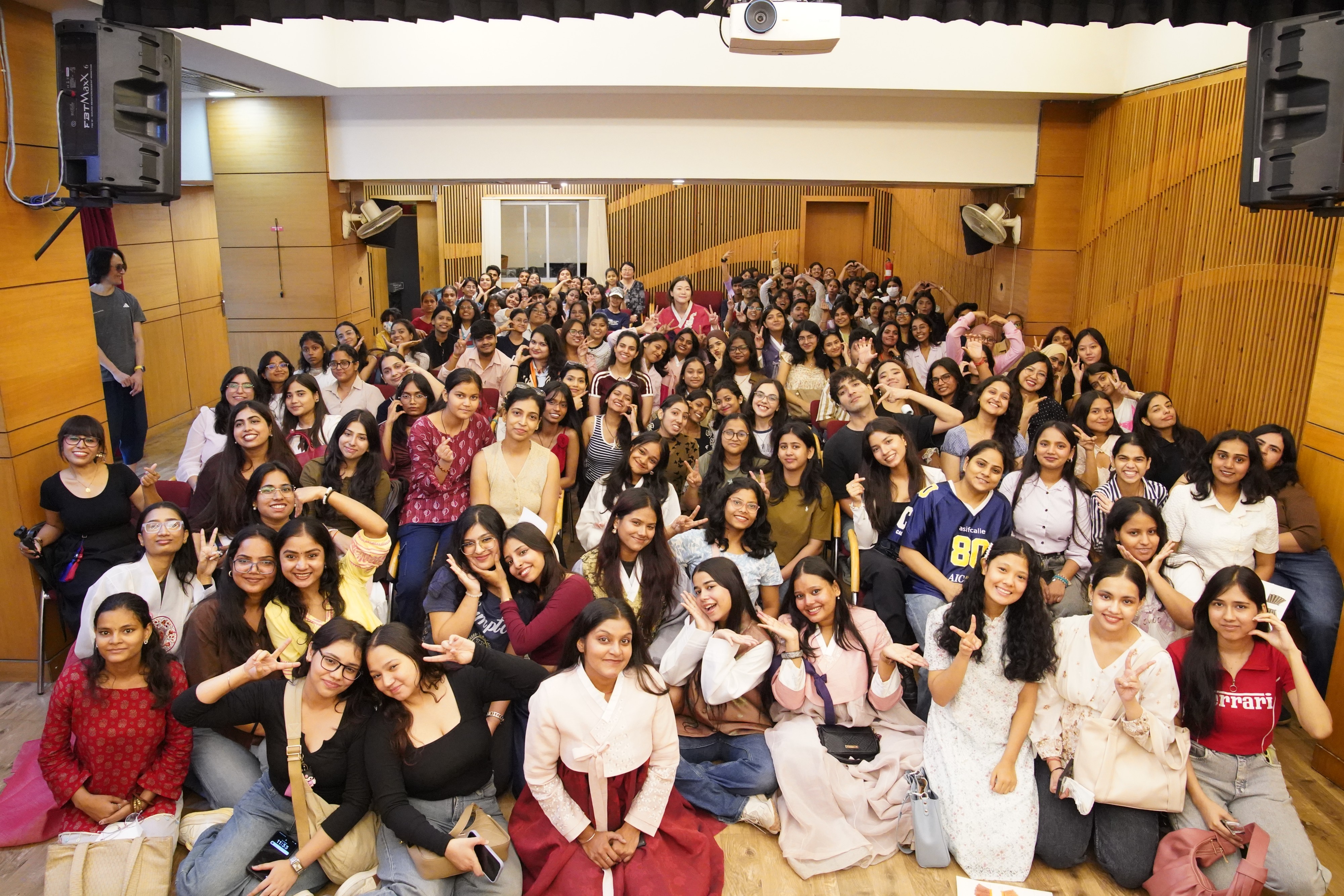
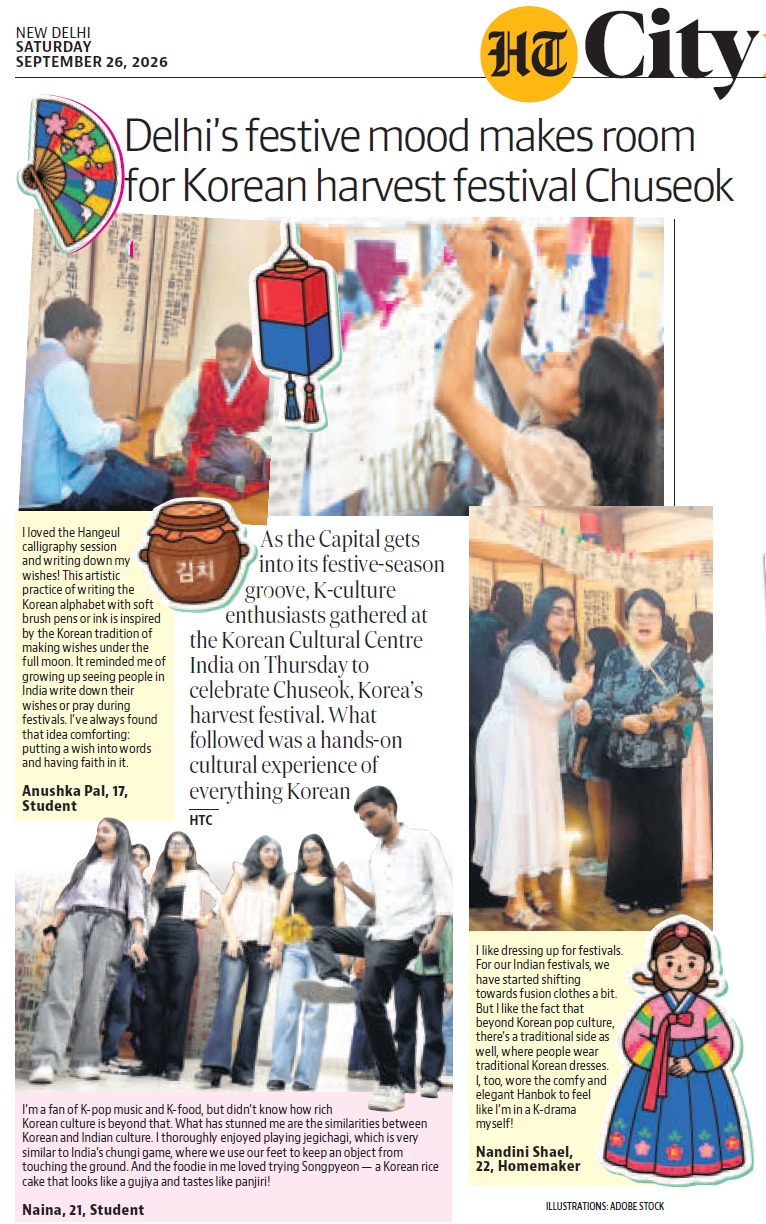
The Korean Cultural Centre India brought the spirit of Chuseok, Korea’s traditional harvest festival, to Indian audiences through an engaging celebration of Korean culture and traditions. The celebration offered participants an opportunity to discover the festive customs of Chuseok through a range of interactive activities, including Hangeul calligraphy, ‘Paper Hanok Making’ and traditional Korean folk games. Blending creativity, cultural learning and hands-on experiences, the celebration provided Indian participants with a closer glimpse into Korea’s rich artistic traditions, architectural heritage and the festive spirit of Chuseok.
Chuseok, observed on the 15th day of the eighth month of the lunar calendar, is an important Korean holiday that celebrates the autumn harvest and brings families together to express gratitude, share food and strengthen familial bonds. Drawing parallels with India’s harvest and festive traditions, the programme will offer participants an opportunity to explore the cultural values of gratitude, togetherness and abundance associated with Chuseok.
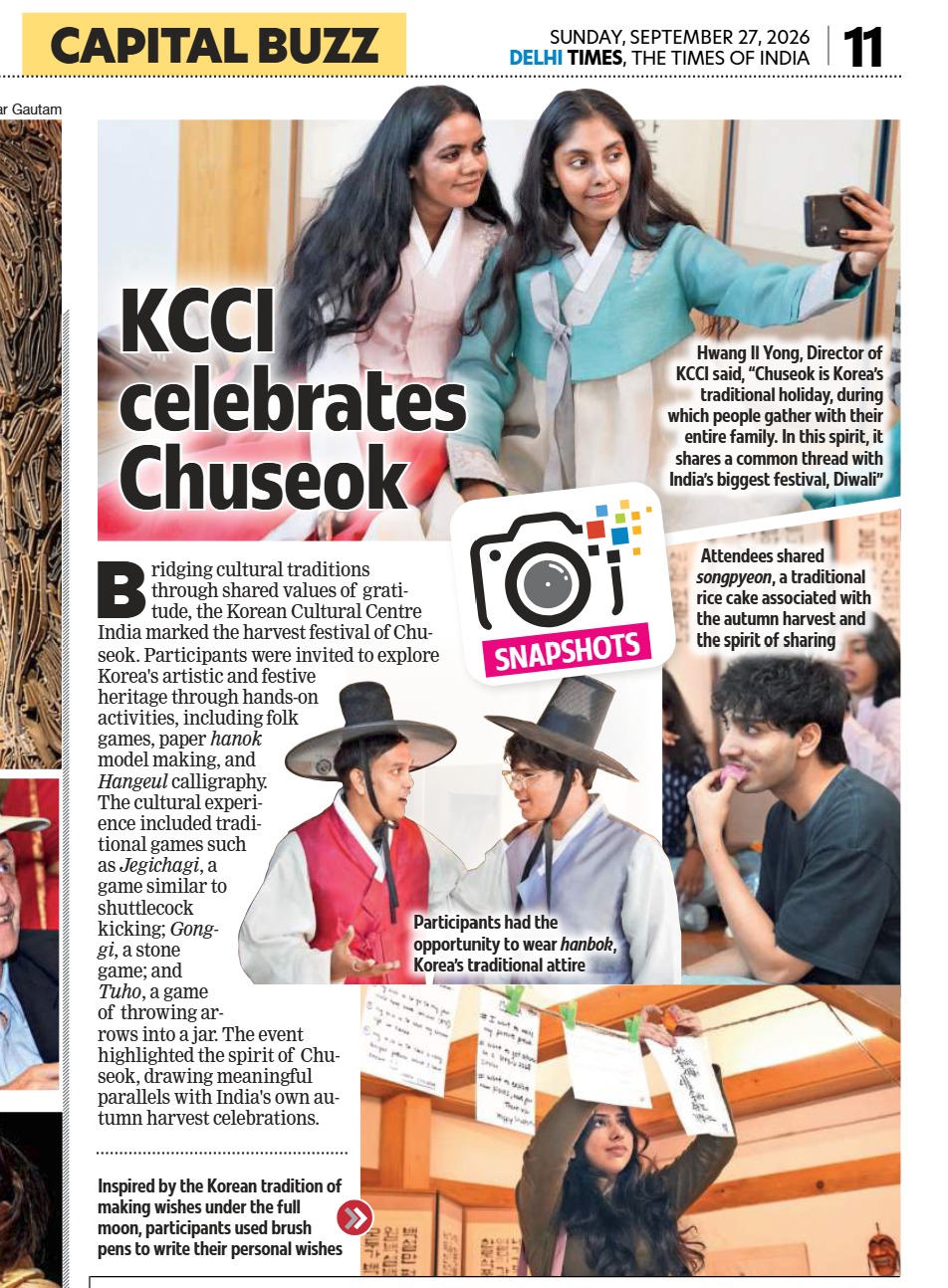
The event began with an introduction to the customs and significance of Chuseok, followed by a Hangeul calligraphy session. Inspired by the Korean tradition of making wishes under the full moon, participants used brush pens to write their personal wishes, and experience the artistic expression and beauty of Korean calligraphy.
A key highlight of this year’s programme was the introduction of ‘Paper Hanok Making’, a new activity designed to familiarise participants with Korea’s traditional residential architecture. Using paper templates, attendees assembled miniature ‘Hanok’ models while gaining insights into the distinctive design and architectural characteristics of traditional Korean homes. The activities provided a creative and accessible way to engage with Korea’s architectural heritage.
The cultural experience further included the playing of traditional Korean games such as Jegichagi, a game similar to shuttlecock kicking; Gonggi, a traditional stone game; and Tuho, a game of throwing arrows into a narrow-necked jar. Participants also had the opportunity to wear ‘hanbok’, Korea’s traditional attire, and share ‘songpyeon’, a traditional rice cake associated with the autumn harvest and the spirit of sharing.
Hwang Il Yong, Director of Korean Cultural Centre India said, “Chuseok is Korea’s representative traditional holiday, during which people express gratitude for the fruits of the year’s harvest and gather with their entire family to share their hearts. In this spirit, it shares a common spiritual thread with India’s biggest festival, Diwali, during which people light lamps and pray for their family’s health and prosperity. This year, by introducing participants to the architectural heritage of Hanok and the cultural significance of Chuseok customs, we aim to deepen appreciation for Korea’s traditional culture while encouraging greater people-to-people exchange between India and Korea.”


 Facebook
 X
 YouTube
 Instagram
